
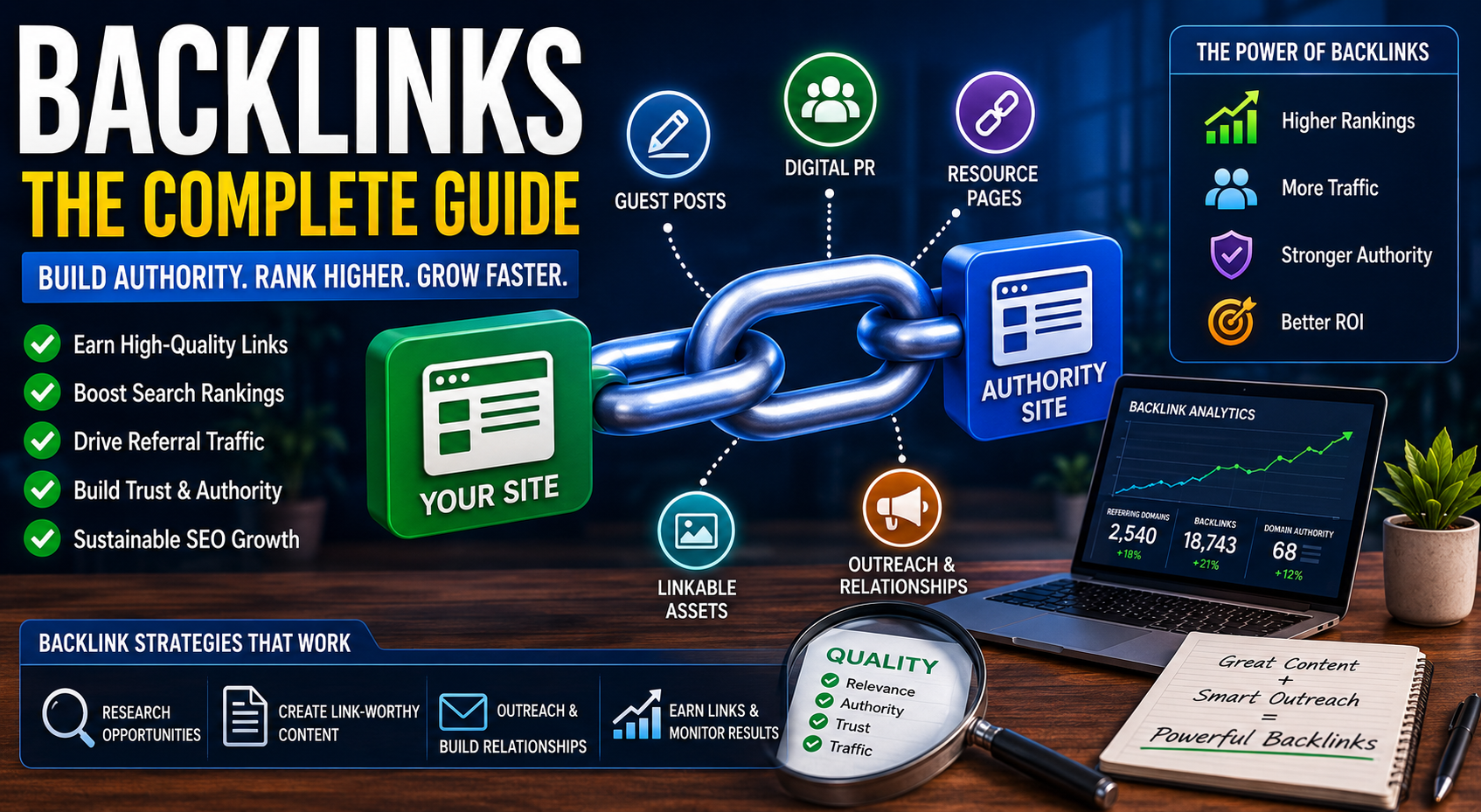
Backlinks remain one of the clearest signals search engines use to evaluate authority and relevance. While algorithms have evolved to better assess link quality and intent, the core principle hasn’t changed: pages that earn credible, contextually relevant links tend to rank higher. The nuance today is knowing which links help, which are neutral, and which can harm — and then building a program that attracts the former while avoiding the latter.
What is a Backlink and Why It Matters
A backlink is a hyperlink from another website to your page. To search engines, each link functions like a vote of confidence. But not all votes are equal. A link from a well-regarded, topically relevant site carries more weight than dozens from thin or irrelevant directories. Quality, context, and the naturalness of your link profile are the decisive factors.
Beyond ranking impact, backlinks drive referral traffic, build brand awareness, and help search engines discover new pages faster through crawling. This combination of authority, traffic, and discovery makes backlinks a foundational element of organic growth.
Quality Signals Search Engines Look For
- Topical relevance: Does the linking page cover a subject closely related to yours? Contextual links embedded in relevant copy are stronger than sidebar or footer links on unrelated topics.
- Authority and trust: Links from respected publications, universities, government sites, and established industry leaders tend to carry more value.
- Natural placement: Editorially placed links within body content, earned because your resource adds value, outrank links that look transactional or templated.
- Anchor text balance: A diverse mix of branded, URL, partial-match, and natural anchors looks healthier than repetitive exact-match phrases.
- Page-level strength: The authority of the specific linking page (not just the domain) matters. A link from a high-traffic, well-linked article is typically potent.
- Indexation and visibility: If the linking page is crawled, indexed, and receives organic traffic, its link equity is more likely to pass.
Types of Backlinks: What Helps and What to Avoid
- Editorial contextual links (strong): Earned through content that others genuinely cite. These are the gold standard.
- Resource page links (strong to moderate): Curated lists that link to best-in-class tools, studies, or guides.
- Guest posts (situational): Still effective when high quality, relevant, and transparently authored. Avoid sites with thin content or obvious link schemes.
- HARO/PR citations (strong): Quotes and data-driven pitches to journalists can secure authoritative mentions and links.
- Niche directories and communities (moderate): Useful when curated and relevant; avoid mass directory submissions.
- UGC/forum links (low to moderate): Good for discovery and niche traffic; limited ranking impact, but can be valuable in aggregate.
- Paid/sponsored links without proper disclosure (risky): If money or gifts change hands, use rel=”sponsored.” Undisclosed paid links can trigger penalties.
- PBNs and manipulative schemes (high risk): Networks built solely to pass PageRank are detectable and dangerous.
How to Earn Backlinks the Right Way
- Create linkable assets:
- Original research: Surveys, benchmarks, or data studies that publishers cite.
- Definitive guides: Comprehensive, updated resources that become references in your niche.
- Tools and templates: Calculators, checklists, and frameworks that solve recurring problems.
- Visual assets: Infographics, diagrams, and charts that others embed — with a credit link.
- Use smart outreach:
- Identify pages that already link to related resources and pitch your superior asset.
- Personalize each pitch. Explain the gap your resource fills and anchor to a relevant section.
- Reference broken links you’ve found and offer your content as a replacement (broken link building).
- Leverage digital PR:
- Tie your data or expert commentary to timely trends, then pitch journalists with concise angles.
- Maintain a press page with your company background, expert bios, and downloadable assets.
- Partner and collaborate:
- Co-author studies with complementary brands.
- Appear on podcasts and webinars; many hosts publish show notes with links.
- Contribute expert quotes to roundups where the site’s quality and relevance check out.
- Optimize for passive link attraction:
- Keep your content fresh with new data and examples.
- Add clear, embeddable elements (charts, code snippets, diagrams) with attribution guidance.
- Use internal linking to surface your most linkable pages so visitors discover and share them.
Evaluating Link Prospects
Before pursuing a link, assess:
- Relevance: Does the site and page serve your audience?
- Content quality: Is the writing original, well-edited, and non-spammy?
- Traffic and visibility: Use third-party estimates to gauge real readership.
- Link neighborhood: Do outbound links look editorial, or do they point to casinos, pills, and essay mills?
- Technical signals: Is the page indexable, fast, and usable on mobile?
A simple rule: If you’d be proud to show the link to your customers and peers, it’s likely a sound target.
Anchors, Attributes, and Link Placement
- Anchor text: Aim for natural phrasing. Over-optimization (e.g., many exact matches like “best CRM software”) is a red flag.
- rel attributes:
- rel=”nofollow” tells search engines not to pass ranking signals.
- rel=”sponsored” discloses paid/sponsored relationships.
- rel=”ugc” marks user-generated content links. A natural profile includes a mix; dofollow is not the only useful link type.
- Placement: In-content links, near relevant text and above the fold, generally carry more weight than boilerplate footer links.
Measuring Impact Without Guesswork
- Track referring domains and new backlinks to your key assets.
- Monitor organic keyword movement for pages that received links.
- Watch assisted conversions from referral traffic.
- Compare crawl rate and indexation improvements after major link acquisitions.
- Annotate campaigns so you can attribute gains to specific assets and outreach windows.
Avoiding Penalties and Pitfalls
- Don’t automate outreach at scale or use spun templates.
- Avoid sitewide links unless they are navigational and user-first.
- Don’t swap links in obvious patterns (“you link me, I link you” networks).
- Disavow sparingly, focusing on truly toxic, obviously manipulative domains if they appear in bulk.
- Document intent: keep records of pitches, editorial acceptance, and the value your asset provided.
A Sustainable Backlink Strategy
Sustainable link building blends outstanding content, thoughtful promotion, and integrity. Treat links as a byproduct of usefulness — not the goal itself. Invest in assets people want to reference, show up where your audience and industry editors pay attention, and let quality do the compounding over months, not days. In 2026, the safest and strongest strategy remains simple: earn attention, and the right links will follow.
Discover more from Think Daily
Subscribe to get the latest posts sent to your email.